Kishore Kumar ji, who lives in North Goa, and is the head acharya of the Central School, says, "Goa is different in every season, if it is Catholic in December, Latin America in April, and traditional India with the monsoon. Here every street of every village has its own god, for which the whole village worships together. Ganesh Chaturthi is a festival when even the Govan people who settled abroad come back to Goa. No matter how much there is a dispute about the land, at the time of worship, everyone lives in the same house and eats the same kitchen food.
Those who see Goa from the outside recognize it only from the churches and think that there are only Christian settlers in Goa, but in Goa, evidence of the grand existence of Hindu society has been seen before the Portuguese. When the time of the Portuguese came, they did not even allow the Hindu sect to keep the idols of their favored gods in their houses. In such a situation, The Hindu people used to keep pictures of the gods and goddesses hidden under the clothes on their shelves. And they used to pray. Then when Goa was liberated from the Portuguese, they had the opportunity to worship their gods with full freedom. Since then, the Hindu community here has been celebrating their festivals with great enthusiasm. You will be surprised to know, but in Goa, Holi is celebrated for a whole week.
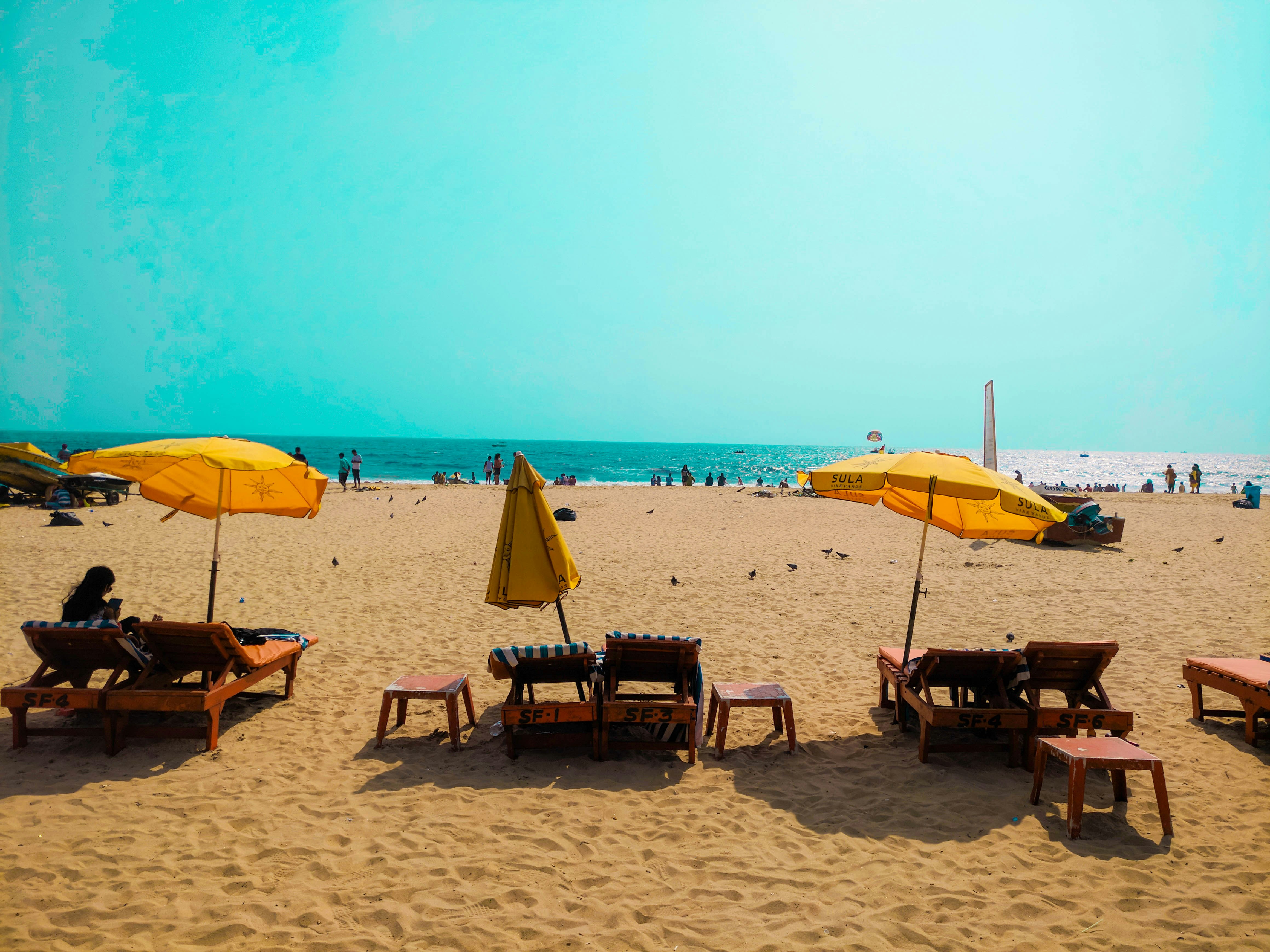
Goa is mainly divided into two parts, North Goa and South Goa. In North Goa, where there is fun, there is fun, there are beaches and there are hippies dancing, in South Goa there is nature, there are forests, there are villages, there are rivers, there are waterfalls, there are people and there is a rhythm between all this, there is a rhythm, there is a tune, there is rhythm.
Generally, Goa is known to everyone for its beaches and as a state that was once a colony of the Portuguese. But it doesn't end here, my friend. Goa has been beating the hearts of the local people in the hearts of the local people here before the arrival of the Portuguese in their traditions and their unique festivals. So let's introduce you to some of the same traditions associated with the memories of the past through this monsoon festival.
The people of Goa celebrate every season as a joy, even if that memory has been a sad event in the past. One such festival is Bondaram. The festival is celebrated on the fourth Saturday of August every year on a beautiful island called Wall Island, 12 kilometers from Panjim.
Bonderam Festival
The word bondrum means flag in Portuguese. That's why this festival is also called the Flag Festival. There is also an interesting story behind this festival. When the Portuguese ruled Goa 450 years ago, there were frequent disputes between the two sects of the walled village over land. This often led to violence here. To deal with this problem, the Portuguese government came up with a solution and they set limits on the land using flags. Both sides of the village were not happy with this arrangement and they used to target and drop the marked flags. The festival is celebrated today to commemorate the same movement of the villagers against the Portuguese government. Today, people do not really stone in this festival, but play the game of targeting each other in his memory. Wall Island, which is always quiet, comes in the whole festive mood on this day. People come from far and wide to participate in this festival. A colorful parade is seen before the festival begins. In which the people of the village take out different peeps. People give life to this parade by singing, music, and dancing. It is also known as the Harvest Festival. In the true sense, it is an unusual way to get acquainted with the Konkani culture and rural life of Goa. The Koli dance of the fishermen, the fancy dress, and jhakis adorned with fruits and vegetables present a different sixth of the rural life here. People take part in this parade.
Chikal Callo Festival
How Lord Krishna will be enjoying the rainy season with his friends in his childhood, if you want to see living proof of it, then go to Goa. Cheekel callo is also known as the mud festival. This festival is celebrated by remembering the child sports of Lord Krishna when he used to play in the mud with his friends in the rain.
It is also a local festival of Goa and is celebrated on the 11th day of the month of Ashadh. Which falls in the second or third week of July. The festival is celebrated in the courtyard of the Devaki Krishna Temple in Marsl village of Ponda, 17 km from Panjim. The bhajan kirtan in the temple would have started 24 hours before the festival. The courtyard of the temple is filled with mud and mud due to rain. Those who participate in the festival come to play by applying oil to their bodies. It is a unique festival of Goa which belongs to the Hindu community. On this day, every male member of the village, whether it is a child or an old man, is seen in the form of Krishna. The game of Dahi Handi is also seen in this festival.
Jackfruit face
This is a festival dedicated to jackfruit, yes. You may not believe it, but jackfruit in Goa is considered to be the king of fruits and vegetables. The festival is celebrated in the villages of Goa during the Sao Jovo Festival. While the main food of Goan rural life is considered incomplete without fish or other masahari dishes and wine, it is a festival that is completely vegetarian. Sachidanandji, a resident here, who is also a home chef, says that more than 100 food recipes can be prepared from jackfruit. Nature is the precious gift of Mother Jackfruit, for us Goa residents. Everything in this tree is useful. From wood to fruit flowers, even the leaves. A beverage such as coffee is also prepared from its seeds. For those who come to this festival, the villagers make crowns from the twigs and leaves of the jackfruit tree. People thank nature by decorating their garments with fruits and vegetables. In this festival, delicious dishes prepared from jackfruit are served.
Sao Jovo Festival
This festival is also a monsoon festival. Which belongs to the Catholic society. This celebration is associated with the folk beliefs of Christianity and the birth of the Lord Ishu. This festival is dedicated to Saint John. People come from their villages by boat in the stream of the valley and meet and celebrate. In this festival, people also decorate their boats very well. People eat a lot of fruits and drink alcohol. And symbolically leap with joy in the river, pond, or bawdi.
This festival is specially celebrated in the community of fishermen. Although this festival is celebrated all over Goa, mainly it is celebrated in Silomi village.
Enjoy trekking in monsoons
Friends, ask anyone where the monsoon looks the most beautiful in India. You'll get the same answer that western pier. Also known as the Western Plateau. The 1600-km-long range falls at the eighth position in the entire world for biological diversity in the world. That is why UNESCO has identified 39 of its sites as World Heritage Sites. And, interestingly, this Western Ghats, starting from the border of Gujarat and Maharashtra, extends through Maharashtra, Goa, Karnataka, Tamil Nadu, and Kerala to Kanyakumari.
Some of the most special treasures of this qudarat are also spread in Daman, Goa, which is like a paradise for trekking lovers in the rainy season.
When rainy springs erupt in such a place between Haryana in the forests. The whole forest wakes up to a tizzy smell. When the cook of a decorated shy bird resonates with silence. Then comes the real fun. Trekking in such forests. Where there is only nature and you are. What a pleasant and unique experience it is that you are going to the wet forest and suddenly your bag pack hits a bush and thousands of small yellow butterflies from that bush start flying through the furr.
There are many beautiful waterfalls in these forests such as Kumtad Falls, Dudhsagar Waterfall, Chorla Waterfalls, and Pali Waterfalls. Yes, I would like to tell you one thing about these waterfalls. It takes a little effort to see something very spectacular. So without trekking in the forest, you cannot witness that precious sight.
There are also special wildlife centuries.
Goa is part of the Western Ghats and is an area of biological diversity that is very conducive to wildlife.
Kotigaon Wildlife Century
Goa Located on the border of Karnataka, Kotigaon wildlife sanctuary is a boon to the state of Goa. You can also stay in this beautiful wildlife sanctuary. For this, you will have to book a guest house in advance in the forest office. You can do hilltop hiking in this century, meeting the Velip and Kunbil people, the very old tribal communities of Goa living within this dense forest. This century holds special significance for nature lovers. There are some very ancient trees here. The forest here is so dense that there is no sunlight anywhere.
Bhagwan Mahavir Wild Life Century
Dudhsagar waterfall
When the matter of the wildlife century has been raised, it cannot be that Lord Mahavir is not talking about the wildlife century. You will connect this wildlife century more to the Dudhsagar waterfall. Spread over 240 square kilometers, this century is very special in itself. Coming out from the top of the mountains behind, the stream of white water shining like milk and passing over the bridge from the front, the Indian Railways create such a vision that a person loses his senses for a while. This beautiful view is inside this wildlife century. If you want to sit on the train and see this unique sight, then travel by train on the Mangalore to Margao route of the Konkan Railway and enjoy getting drenched by the spray of milk ocean waterfall coming from the window.
There are also many jungle resorts and forest guest houses inside this sanctuary. To fully enjoy nature here, it is important to spend a few days within the century.
White water rafting in the Mhadei River
As soon as the monsoon showers start, while the whole of Goa is flooded, water rafting is also introduced by Goa Tourism in the Mhadei River in the month of June for the white water rafting voters. And this trend goes on from June to September. The journey begins from the Mhadei River Valley. The responsibility of conducting this thrill-filled white water rafting lies in the hands of professionals and all aspects related to safety are already taken care of.
tropical plantation
Both the hard work and nature of the rural farmers here have contributed a lot to the prosperity of Goa. We get to see its beautiful picture in the villages of Goa where the tropical plantation is done. The way to these villages passes through the high bushes of coconuts. And the funny thing is that we get to see these scenes only within a radius of 30-35 kilometers from Panjim. One such village is Keri which falls in Ponda tehsil. Where tropical ispeace plantation is seen.
How people cultivate areca nuts, spices, and cashews in the fields. At the same time, the factory processing cashew nuts can also be seen nearby. Apart from this, there is also a provision of guided tours for the expansion plantation. And here by eating Goa's food on banana leaves with the local people in the village, you can make this trip even more memorable.
Fish Farming Trail
Fish is an integral part of the life of Goa, and is also the main occupation of the people here. After all, the region has a 104 km long coastline and about 250 inland waterways. There are also five major rivers and the Goa government makes a big contribution to fish farming so that the local fishermen here can be supported. In a state where 95 percent of the population's staple food is fish, the fishing farming trail is to be seen. It is very pleasant to go to the villages of the fishermen and spend a day among them. It is also an experience to look closely at modern and traditional methods of fishing. If you are fond of seafood, then by visiting these villages, you can enjoy cooked fish and other seafood in many ancient ways.
Zaike Goa's-Goan Food
A trip to Goa will be considered incomplete unless there is a mention of Goa food. The earliest impact on the mines of Goa is that of the Konkani mines. This was before the arrival of the Portuguese. Along with that, the food of the Muslim rulers and the Portuguese colony were also painted in the color here. The highest variety is found in the mines of Goa, the C-food. A variety of fish and your own ways of cooking them. If you go to the villages of fishermen, you will find that somewhere the primitive method of cooking fish is still alive. The fish is marinated with salt turmeric and lime, wrapped in banana leaves, placed in the middle of the pallet collected from nearby, and set on fire in the fungus in a few minutes the fun fish is cooked and ready. While fish fry and fish curry are mainly part of Konkani cuisine, Goa learned to bake the mines from the Portuguese. Being adjacent to Karnataka and Maharashtra, the Goan mines included spices and vegetables here.
You stay like this, with me, with any other story hidden in every corner of India. Until then, be happy and keep moving around.


0 comments